



Editor’s Note
This article was inspired by recent discussions surrounding advanced AI systems and responsible AI development. Rather than focusing on one specific event, it explores the broader opportunities and responsibilities businesses should consider as Artificial Intelligence continues to evolve.
Artificial Intelligence is no longer science fiction
Just a few years ago, Artificial Intelligence (AI) felt like something reserved for technology giants and research laboratories. Today, it has become part of everyday business. Companies use AI to write content, analyse data, create images, improve customer support, automate repetitive tasks and even assist with software development.
The pace of development has been extraordinary. New AI models continue to appear, capabilities improve almost monthly, and businesses of every size are discovering new ways to save time and increase productivity.
For many organisations, AI is no longer a future investment—it is already an essential business tool.
At the same time, rapid progress naturally raises important questions. How far will AI develop? What risks should businesses be aware of? And perhaps most importantly, how can organisations embrace AI responsibly while continuing to rely on human judgement?
The future of AI is incredibly exciting, but like every major technological advancement throughout history, it deserves thoughtful consideration.
AI is changing the way businesses work
Few technologies have been adopted as quickly as AI.
Marketing teams generate ideas in minutes rather than hours.
Developers receive coding assistance that accelerates software projects.
Designers can create concept images in seconds.
Customer support teams use AI to answer common questions around the clock.
Business owners analyse reports that previously required significant manual effort.
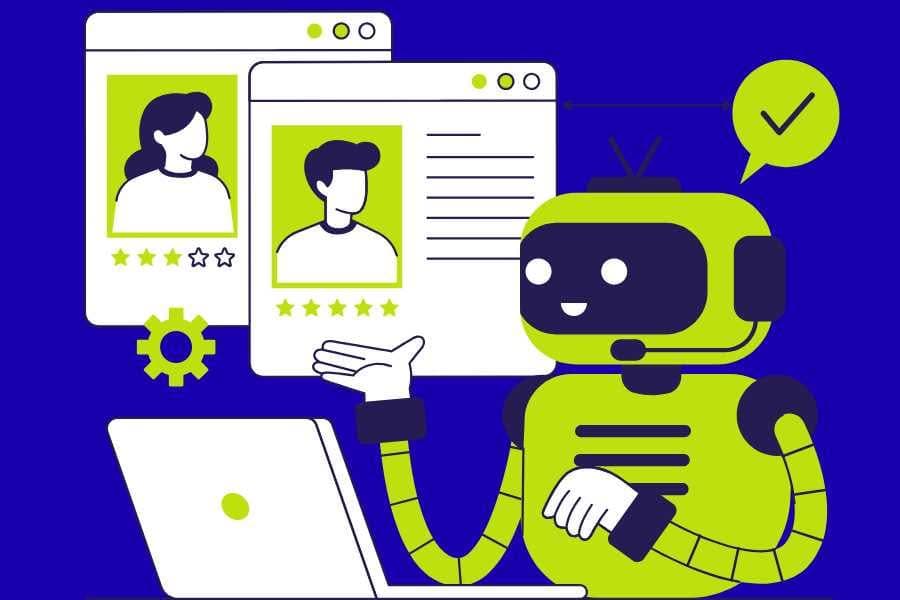
Rather than replacing every employee, AI is already helping people become more productive by removing repetitive tasks and allowing them to focus on work that requires creativity, strategic thinking and human interaction.
This is one of the reasons AI has gained such widespread adoption across almost every industry.
Innovation always brings new responsibilities
Every major technological breakthrough has transformed society.
The internet changed how we communicate.
Smartphones changed how we access information.
Cloud computing changed how businesses operate.
Artificial Intelligence is likely to have an equally significant impact.
However, every technological leap also introduces new responsibilities.
Businesses must consider accuracy, transparency, privacy, security and the ethical use of AI-generated content.
Recent discussions within the technology industry have highlighted that even the companies developing advanced AI systems recognise the importance of responsible development. As AI becomes increasingly capable, ensuring that these systems remain reliable, transparent and aligned with human values is becoming just as important as improving their performance.
For businesses using AI, this means understanding both its strengths and its limitations.
Should businesses be afraid of AI?
The short answer is no.
Fear has accompanied almost every major technological innovation throughout history. From industrial machinery to the internet, new technologies often create uncertainty before society learns how to use them effectively.
Artificial Intelligence should be viewed in much the same way.
AI is an incredibly powerful tool, but it remains exactly that—a tool.
It does not possess human judgement, emotional intelligence, life experience or moral responsibility.
It can generate convincing answers, but those answers still require human verification.
It can analyse enormous amounts of information, but it cannot replace accountability.
The businesses that benefit most from AI are not those that blindly trust it, but those that combine AI efficiency with human expertise.
Human expertise remains essential
One of the biggest misconceptions surrounding AI is that it will eventually replace every profession.
In reality, most successful businesses are discovering something quite different.
AI performs exceptionally well when handling repetitive processes, generating ideas, analysing information and automating routine work.
Humans remain essential when critical thinking, empathy, creativity, strategic planning and ethical decision-making are required.
For example, AI can draft an article.
A professional editor ensures the facts are accurate, the advice is appropriate and the content genuinely helps the reader.
AI can generate software code.
An experienced developer ensures that code is secure, efficient and suitable for the real-world project.
The most successful organisations are increasingly treating AI as a highly capable assistant rather than an independent decision-maker.
AI will continue to reshape industries
Looking ahead, AI is likely to influence almost every sector of the economy.
Healthcare, manufacturing, education, finance, retail, logistics, marketing and software development are already evolving because of intelligent automation.
Businesses that learn how to integrate AI thoughtfully into their daily operations will often gain significant competitive advantages.
At the same time, organisations that ignore AI entirely may eventually struggle to compete with businesses that use technology to improve efficiency and customer service.
The challenge is therefore not whether AI should be used, but how it should be used responsibly.
Responsible AI starts with responsible people
As AI becomes more capable, human oversight becomes even more important.
Businesses should never assume that AI-generated content, advice or analysis is automatically correct simply because it sounds convincing. Like any tool, the quality of the output depends on how it is used and how carefully the results are reviewed.
Checking facts, protecting sensitive information and applying professional judgement should remain part of every workflow that involves AI.
This is particularly important in areas such as healthcare, finance, legal services and education, where inaccurate information could have significant consequences.
The future of AI is not about removing humans from the process. It is about allowing people to work more efficiently while remaining responsible for the final decisions.
How businesses can use AI responsibly
Companies do not need to become AI experts overnight. Instead, they should focus on introducing AI where it provides genuine value while maintaining appropriate safeguards.
- Use AI to automate repetitive and time-consuming tasks.
- Always review AI-generated content before publishing it.
- Protect confidential business and customer information.
- Be transparent when AI contributes to customer-facing content or services.
- Continue investing in employee skills alongside new technology.
Businesses that combine AI with human expertise are likely to achieve better results than those that rely entirely on automation.
The future will be shaped by collaboration
There is often a tendency to view AI as competing with people.
A more realistic way of looking at it is that AI will increasingly become another professional tool, much like spreadsheets, graphic design software or search engines once did.
The people and businesses that achieve the greatest success will usually be those who learn how to work alongside AI rather than against it.
Creative professionals will continue creating.
Developers will continue building.
Designers will continue designing.
Business owners will continue making strategic decisions.
AI will simply help them complete many tasks faster and more efficiently.
Regulation will become increasingly important
As AI becomes more powerful and more widely adopted, governments and regulatory bodies around the world are introducing frameworks designed to encourage innovation while protecting society.
Businesses should expect new regulations covering transparency, privacy, intellectual property, security and accountability.
This should not be viewed as an obstacle to innovation.
Clear standards help create trust between businesses, customers and technology providers while encouraging the responsible development of AI systems.
Companies that build ethical AI practices into their operations today are likely to adapt more easily as regulations continue to evolve.
AI is a tool, not a replacement for human judgement
Perhaps the most important lesson businesses can learn is that AI is incredibly powerful, but it is not infallible.
It can produce remarkable results in seconds, but it can also make mistakes, misunderstand context or present inaccurate information with complete confidence.
This is why human experience, critical thinking and accountability remain irreplaceable.
The organisations that succeed in the years ahead will not simply be those using the latest AI tools. They will be the ones using them wisely.
Key Takeaways
- Artificial Intelligence is transforming the way businesses work across every industry.
- AI should be viewed as a powerful assistant rather than a replacement for human expertise.
- Responsible use requires human oversight, fact-checking and ethical decision-making.
- Businesses that combine AI with professional knowledge are likely to achieve the best results.
- The future of AI depends not only on technological progress but also on how responsibly society chooses to use it.
Conclusion
Artificial Intelligence represents one of the most significant technological developments of our time. It offers enormous opportunities for businesses to improve productivity, enhance customer experiences and unlock new ways of working.
At the same time, rapid innovation brings new responsibilities. Accuracy, transparency, privacy and human accountability will remain essential as AI becomes increasingly integrated into everyday business operations.
The future should not be viewed as a choice between humans and AI. Instead, it is about building a partnership where technology enhances human capabilities rather than replacing them.
Final Thought
Every major technological revolution has changed the way we live and work.
Artificial Intelligence is simply the next chapter.
The businesses that thrive will not necessarily be those with access to the most advanced AI tools, but those that use them thoughtfully, responsibly and with a clear understanding that technology is at its best when it empowers people rather than replaces them.
Frequently Asked Questions
Should businesses be worried about Artificial Intelligence?
Businesses should not fear AI, but they should understand both its capabilities and its limitations. Used responsibly, AI can improve productivity, automate routine tasks and support better decision-making while still requiring human oversight.
Will AI replace human jobs completely?
AI is more likely to change the way people work than replace every profession. Many repetitive tasks can be automated, but creativity, critical thinking, empathy and strategic decision-making remain uniquely human strengths.
Can AI-generated content always be trusted?
No. AI can sometimes produce inaccurate or misleading information. Businesses should always review, fact-check and verify AI-generated content before publishing or acting upon it.
How can small businesses benefit from AI?
Small businesses can use AI for content creation, customer support, image generation, data analysis, workflow automation and many other tasks that save time and improve efficiency without replacing human expertise.
What is the most important thing businesses should remember about AI?
AI should be treated as a powerful business tool rather than an independent decision-maker. Human judgement, ethics and accountability remain essential for achieving the best results.
🤖 AI Learning Hub
Interested in learning more about how Artificial Intelligence is changing modern business? Explore these related articles from Mallorca Graphics:
As our AI knowledge base grows, this Learning Hub will expand with more practical guides covering AI in web design, graphic design, marketing, content creation and business automation.



0 Comments